




Which SUV handles off-road trails around Reading, PA better — 2026 Jeep Wrangler or 2026 Toyota 4Runner?
Miracle Jeep – Which SUV handles off-road trails around Reading, PA better — 2026 Jeep Wrangler or 2026 Toyota 4Runner?
When shoppers compare the 2026 Jeep® Wrangler and the 2026 Toyota 4Runner, one question rises to the top: Which SUV is truly better for off-road trails around Reading, PA? Both are body-on-frame, both love a muddy trailhead, and both offer advanced 4WD setups—but the way they achieve traction and confidence is quite different. Below, we break down the mechanical hardware, trail tools, and real-world use cases that matter on local routes from State Game Lands spurs to rocky fire roads near French Creek State Park.
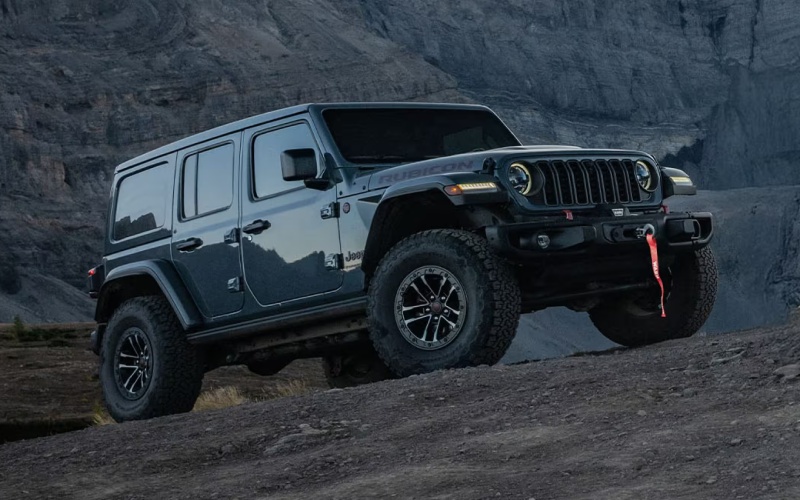
Start with the basics of how each SUV puts rubber to dirt. Wrangler uses solid front and rear axles, which maintain consistent ground contact across uneven surfaces and deliver excellent articulation. On Rubicon models, the Rock-Trac® 4×4 System offers a 4:1 low range and an available 100:1 crawl ratio when equipped with the manual transmission and 4.88:1 axles, plus available Tru-Lok® locking differentials and an Electronic Sway Bar Disconnect to keep suspension travel generous at low speeds. The 4Runner’s new TNGA-F platform is a modern body-on-frame design with an available Stabilizer Disconnect Mechanism to increase articulation, and it combines with either Part-Time 4WD or an available Full-Time 4WD system. It’s unquestionably capable, especially with up to 33-inch all-terrain tires on TRD Off-Road and TRD Pro grades, but the front independent suspension can’t quite match the Wrangler’s old-school, rock-credible feel over choppy, staggered terrain.
Traction is only half the story—visibility and control matter just as much. Wrangler’s removable doors and multiple top options, including the available Sky One-Touch® power top, do more than add a smile factor at trail speed. They let drivers lean into sightlines over the hood and fenders and listen for tire feedback in tight rock gardens. That awareness is tough to replicate through a windshield alone. To counter, 4Runner’s available Multi-Terrain Monitor brings high-resolution camera views to a large touchscreen so you can spot rocks and ruts beneath the nose and sills. It’s a welcome tool for low-speed accuracy, and it complements Toyota’s driver-assist suite nicely.
Power delivery shapes confidence off-road as much as outright output. Wrangler’s available 3.6L Pentastar® V6 and 2.0L Turbo I4 keep responses predictable, and importantly, Wrangler still offers a manual transmission on many trims. On technical climbs—think exposed stone ledges or erosion cuts on the way to a viewpoint—manual control over gear selection and throttle can be the difference between a smooth ascent and wheelspin. Toyota’s i-FORCE MAX hybrid system adds serious torque and a refined edge to throttle inputs, which feels terrific over slick surfaces and during precise throttle modulation. For drivers who don’t want a clutch and footwork, the 4Runner’s powertrains deliver no-drama traction and reduced fatigue on longer trail days.
What about the gear that helps when plans change? Wrangler is available with factory steel bumpers and a factory-installed WARN® winch capable of 8,000 pounds. Combine that with solid underbody protection and the option for massive 35-inch tires, and it’s clear the build is ready for recovery and clearance right off the lot. Toyota offers robust TRD accessories and a thoughtful available onboard air compressor—hugely useful for airing up after sand or dirt—but a factory winch isn’t on the menu. If you plan to wheel with friends and play trail lead, those details matter.
One quiet Wrangler advantage: sensor placement. Because Jeep mounts radar sensors above the rearview mirror, drivers can keep available Adaptive Cruise Control and still run trail-friendly steel front bumpers and a winch without blocking those sensors. On some SUVs, the front bumper is where radar lives, forcing a choice between driver aids and trail armor; Wrangler avoids that trade-off.
Beyond the trail, daily livability plays a real role for commuters and families who want one SUV to do it all. Wrangler’s cabin centers around the quick, intuitive Uconnect® 5 NAV with a 12.3-inch display and wireless Apple CarPlay® support and Android Auto™ compatibility, plus available heated front seats and dual-zone climate. The 4Runner’s tech story is strong as well, with an available 14-inch touchscreen, Toyota Safety Sense 3.0, and clever cargo features like a power rear window and tumble-fold rear seats. If you’re prioritizing an easy daily routine with frequent cargo access and camera-based situational awareness, the 4Runner’s innovations hit the mark. If you want your SUV to feel like a front-row seat to the outdoors, Wrangler’s open-air design remains unmatched.
Local ownership realities also factor into the decision. Wrangler is flat-towable when properly equipped, which is a major perk for RV travelers heading to Blue Mountain, Allegheny ridgelines, or coastal getaways. Door and top removal hardware is simpler than ever, too, thanks to quick-release hinges. Toyota’s 4Runner brings a reputation for durability and now includes features overlanders will cheer, like pre-wired AUX switches for accessories. Both vehicles have deep aftermarket ecosystems, but Wrangler’s catalog of authentic Jeep® Performance Parts from Mopar® makes a factory-supported build especially straightforward.
So, which is better for off-road trails around Reading, PA? If your idea of a perfect weekend is scouting a new forest road, setting beads on boulders, and soaking up the sky with the top open, Wrangler is the more immersive and mechanically specialized choice. If you want a technology-forward cabin, camera support for complex lines, and the smooth torque of an available hybrid, 4Runner deserves a close look. Either way, the right build is the one that matches your trail style and travel plans.
Ready to test the differences back-to-back? Miracle Chrysler Dodge Jeep Ram, serving Reading, Pottstown, and Boyertown, can walk you through trims, 4×4 systems, and accessories that align with your favorite trails and your daily routine.
Frequently Asked Questions:
Can I flat-tow either SUV behind my RV?
Wrangler can be flat-towed when properly equipped, thanks to transfer-case Neutral settings on its part-time systems. Toyota does not recommend flat-towing 4Runner models.
Which has better low-speed control for rock crawling?
Wrangler Rubicon’s Rock-Trac® 4×4 with an available 100:1 crawl ratio and a manual transmission offers exceptional fine control. 4Runner’s Full-Time 4WD and available Stabilizer Disconnect Mechanism add confidence, though it lacks a manual transmission option.
Which one is more versatile for everyday life?
Both handle daily duty well. Wrangler’s open-air freedom and modularity make every drive feel special, while 4Runner’s power rear window, camera system, and roomy cargo area cater to frequent cargo loading and family errands.
What about approach angles and tire size?
Wrangler boasts a best-in-class available approach angle on 4-door models and offers available 35-inch tires from the factory. 4Runner comes with up to 33-inch tires on certain off-road trims.
0 comment(s) so far on Which SUV handles off-road trails around Reading, PA better — 2026 Jeep Wrangler or 2026 Toyota 4Runner?