




Does the 2026 Jeep Wrangler need premium gas around Pottstown, PA?
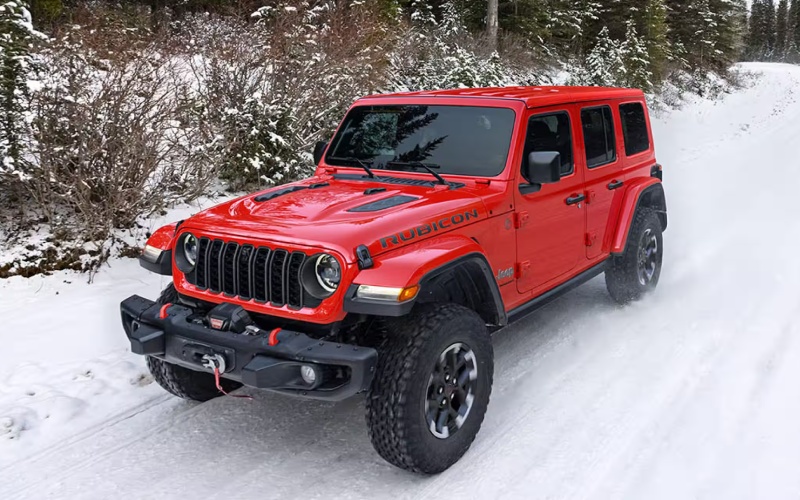
Miracle Jeep – Does the 2026 Jeep Wrangler need premium gas around Pottstown, PA?
Fueling questions come up fast when you are narrowing in on a 2026 Jeep® Wrangler, especially if your daily drives and weekend plans crisscross Route 100, the PA Turnpike, and the trailheads around French Creek State Park. At Miracle Chrysler Dodge Jeep Ram, we help neighbors near Pottstown, PA choose the right Wrangler and the right fuel with confidence. Here is the clear, real-world answer: every 2026 Wrangler engine is engineered to run properly on high-quality unleaded regular gasoline rated at 87 octane by the (R+M)/2 method. If you pick the available 2.0L Turbo I4, premium gasoline rated 91 or higher will allow that engine to achieve optimal performance, which can be helpful in specific driving scenarios common to our area.
In other words, you are never required to use premium in a 2026 Jeep Wrangler. But if you want every bit of responsiveness from the 2.0L Turbo when you are towing, merging uphill, or loaded with camping gear, premium can be a smart choice. Below, we break down how octane affects each Wrangler engine, when premium may pay off around Pottstown, and how to make the best fueling decision for your life.
How octane matters on Wrangler’s two engines
The 2026 Wrangler offers two proven powerplants. The 3.6L Pentastar® V6 is a workhorse many Jeep owners know and love, and it is designed to deliver strong power on regular 87 octane fuel. The available 2.0L Turbo I4 is tuned to perform efficiently on regular 87 as well, but its turbocharging allows the engine to take advantage of higher octane under demanding loads. Premium’s higher resistance to pre-ignition gives the engine more knock protection, so the Wrangler’s engine controls can keep timing more advanced when you are asking for maximum power. That is what Jeep means by “optimal performance” on 91 or higher with the 2.0L Turbo I4.
Think of octane as headroom. Regular 87 gives both Wrangler engines all the headroom they need for normal suburban commuting, back-road cruising to Phoenixville, and errands across Pottstown. Step up to premium only when your 2.0L Turbo I4 will live in that top slice of the power band—like towing a small camper into the Poconos or climbing long highway grades fully packed for a weekend at Blue Marsh Lake.
When premium makes sense near Pottstown
Premium for the 2.0L Turbo I4 is about targeted benefits—use it when the drive demands more from your powertrain. If your Wrangler is a Sahara 4-door commonly paired with the 2.0L Turbo I4, you will notice the biggest difference during extended high-load moments that are common around Southeast PA. Here are local scenarios where premium can help your Wrangler feel its best:
- Mountain or hill climbs: Long grades on I-76 toward the Lehigh Valley or sustained climbs into the Poconos can keep the engine under heavy load for minutes at a time.
- Towing near capacity: The 2026 Wrangler 4-door can tow up to 5,000 pounds when properly equipped, and the extra knock resistance of premium helps the 2.0L Turbo I4 pull cleanly and confidently.
- Heavy cargo and passengers: A fully loaded Wrangler headed from Pottstown to French Creek State Park or Hopewell Lake can benefit from the turbo’s optimal timing on premium.
- Hot summer traffic: Extended idling and repeated hard merges onto Route 422 on warm days can elevate intake temps—premium gives the 2.0L Turbo I4 a wider cushion.
- High-speed highway travel: Maintaining higher speeds on rolling terrain—like stretches of the PA Turnpike—can keep the turbo spooled and responsive.
If most of your driving is a light commute on Charlotte Street, grocery runs along East High Street, and the occasional gravel trail to a picnic site, regular 87 is exactly what your Wrangler was designed to use. You will not harm the engine or void anything by choosing regular—Jeep® explicitly states both engines meet all requirements on 87 octane.
Fuel economy, drivability, and what to expect
Will premium improve mpg? It depends on your route and load. In easy driving, the Wrangler’s sophisticated engine controls already optimize timing on 87, so you should not expect a meaningful fuel economy bump from premium. Under heavier loads, some owners of 2.0L Turbo I4 Wranglers report steadier throttle response on premium—which can make it easier to maintain speed on grades and, in some cases, keep the transmission from downshifting as often. That smoother feel is the “optimal performance” Jeep calls out for this engine on 91 octane or higher.
The best way to decide is to try two or three tanks of 87, then two or three tanks of premium during the same kind of driving. If your Wrangler feels noticeably stronger and more relaxed with the 2.0L Turbo I4 on premium during your usual loads, it may be worth keeping that practice for demanding trips and towing days. If you do not sense a difference, stick with regular—your Wrangler is built to thrive on it.
Quick decision guide for Pottstown-area drivers
Use this simple checklist the next time you are at the pump. It is built around how you actually drive here—and it reflects Jeep’s guidance for the 2026 Wrangler.
- Your engine: 3.6L Pentastar® V6—use 87 octane unleaded; 2.0L Turbo I4—use 87 normally; 91+ for optimal performance under heavy load.
- Your route today: Flat local errands and short commutes—87; long grades on I-76 or Route 222—consider 91+ if you have the 2.0L Turbo I4.
- Your load: Light passengers and gear—87; towing a small camper, boat, or a pair of dirt bikes—91+ for the 2.0L Turbo I4.
- Your feel: Notice pinging or a strained feel under throttle with the 2.0L Turbo I4—try 91+ and see if drivability improves.
- Your destination: Heading for higher elevation or rugged trails beyond Reading—91+ can give the 2.0L Turbo I4 more margin when the going gets tough.
Remember, fueling does not change the Wrangler’s ratings or capacities—those are set at the factory. The 2026 Wrangler 4-door can tow up to 5,000 pounds when properly equipped, and the 2-door can tow up to 2,000 pounds when properly equipped. Premium fuel will not increase those figures, but it can help your turbocharged engine feel more composed while working near them.
It is also worth noting how the Wrangler’s systems work together in the real world. Features like Command-Trac®, Selec-Trac®, and Rock-Trac® 4×4 systems help you put power down efficiently, and every Wrangler proudly wears the Trail Rated® badge. If your adventures often involve low-speed crawling, water crossings, and articulation near Reber’s Bridge, engine load can spike briefly in those moments. That is another situation where choosing premium for a 2.0L Turbo I4 day may add a little extra smoothness when you need it most.
Planning a longer trip? Your Wrangler’s available Uconnect® 5 NAV with the 12.3-inch touchscreen can help you map routes that avoid the steepest grades when you are towing—or simply point you toward a preferred fueling stop along the way. That kind of forethought, paired with the right octane choice, makes ownership feel seamless.
Still unsure which engine fits you best? Visit us at Miracle Chrysler Dodge Jeep Ram in Elverson—just minutes from Pottstown—and we will help you compare the 3.6L Pentastar® V6 and 2.0L Turbo I4 on an actual test loop. We can even simulate a loaded drive, talk through your towing plans, and suggest when premium might make sense based on your routine. Our team also services what we sell, so if you ever have questions about fuel quality, engine performance, or a change in drivability, our Mopar®-trained technicians are here to help.
Frequently Asked Questions:
Is premium gas required for the 2.0L Turbo I4 in the 2026 Jeep Wrangler?
No. Jeep states that the 2.0L Turbo I4 meets all emissions and performance requirements on high-quality unleaded regular gasoline rated 87 octane by the (R+M)/2 method. Using 91 or higher octane premium gasoline will allow this engine to achieve optimal performance, which can be helpful under heavy load.
Does the 3.6L Pentastar V6 benefit from premium fuel?
The 3.6L Pentastar® V6 is engineered to run on regular 87 octane unleaded gasoline. In typical driving, premium does not provide a meaningful advantage for this engine, so 87 is the right everyday choice.
Will premium fuel increase my Wrangler’s towing capacity?
No. Towing capacity is determined by the vehicle’s engineering and equipment. When properly equipped, the 2026 Wrangler 4-door can tow up to 5,000 pounds and the 2-door up to 2,000 pounds. Premium fuel can help the 2.0L Turbo I4 feel smoother under heavy load, but it does not change rated capacities.
Can I mix regular and premium gas if I am switching octane?
Yes. It is fine to switch between octane levels. The resulting octane in your tank will average out. If you are testing premium in a 2.0L Turbo I4 for a demanding trip, run two or three consecutive tanks to get a fair feel for any difference.
What should I do if I hear pinging or knocking under load?
Light pinging can be a sign that the engine is encountering knock under heavy load. If you have the 2.0L Turbo I4, try a tank of 91 octane or higher. If the sound persists on premium—or if you have the 3.6L Pentastar® V6 and notice unusual noise—schedule a visit with our Service Center so we can inspect and advise.
Whether you are fueling up on Hanover Street or gearing up for an off-grid weekend, your 2026 Jeep® Wrangler is ready. Use regular 87 octane for everyday life. If you choose the 2.0L Turbo I4 and plan a demanding haul, step up to 91 or higher for optimal performance—then get out and enjoy the capability, technology, and open-air freedom that make Wrangler iconic. Have more questions? Stop by Miracle Chrysler Dodge Jeep Ram near Pottstown, PA, for a personalized walkthrough and a Wrangler test drive tailored to your roads.
0 comment(s) so far on Does the 2026 Jeep Wrangler need premium gas around Pottstown, PA?